100 acres in Kajiado County, co-owned by care leavers. Young people who left SOS Children's Villages Kenya with no family land and no inheritance now hold this ground together. The plan is not a housing estate: it is a modest gated community of 15 family homes wrapped around a working farm that feeds the residents and sells the surplus locally.
Somewhere of their own
Care leavers leave SOS Children's Villages Kenya at 23, after finishing college, university or other tertiary training - qualified, and with nowhere of their own to go. Unlike their peers there is no family land to return to and no inheritance waiting. This phase gives 15 member households a permanent address on ground they co-own.
What your support delivers
- 15 modest five-bedroom houses, 200 to 250 square metres each
- Single-storey designs with durable, low-maintenance finishes, standardised to control cost
- Septic systems and solar-assisted power and water
- A multipurpose social hall of 150 to 300 square metres for meetings, training and events
- Simple shared recreation: a play area, a multi-use sports court, shaded seating and lighting
Why it is the largest ask
Housing is the most expensive part of any development, and this is the phase that converts a farm into a community. The proposal keeps the cost defensible through one or two standardised house designs, NCA-registered contractors, competitive tendering and bulk purchasing, and it is built last so the land is already productive before the first family moves in.
Help finish what we started.
Budget and goal: this phase is budgeted at up to KSh 305,000,000. The goal of KSh 338,900,000 adds the scalA share (10%) - KSh 33,900,000 - for verifying members, reviewing campaigns and running the platform.
Cost basis: the September 2026 project proposal, which prices the whole development (land excluded) at KSh 280-450 million and this component at KSh 150-280 million for the houses and KSh 12-25 million for the hall. The budget figure is the upper bound. These are 2025-26 Kajiado market estimates; a Bill of Quantities from a registered quantity surveyor will refine them, and a hydrogeological survey and soil tests come first.
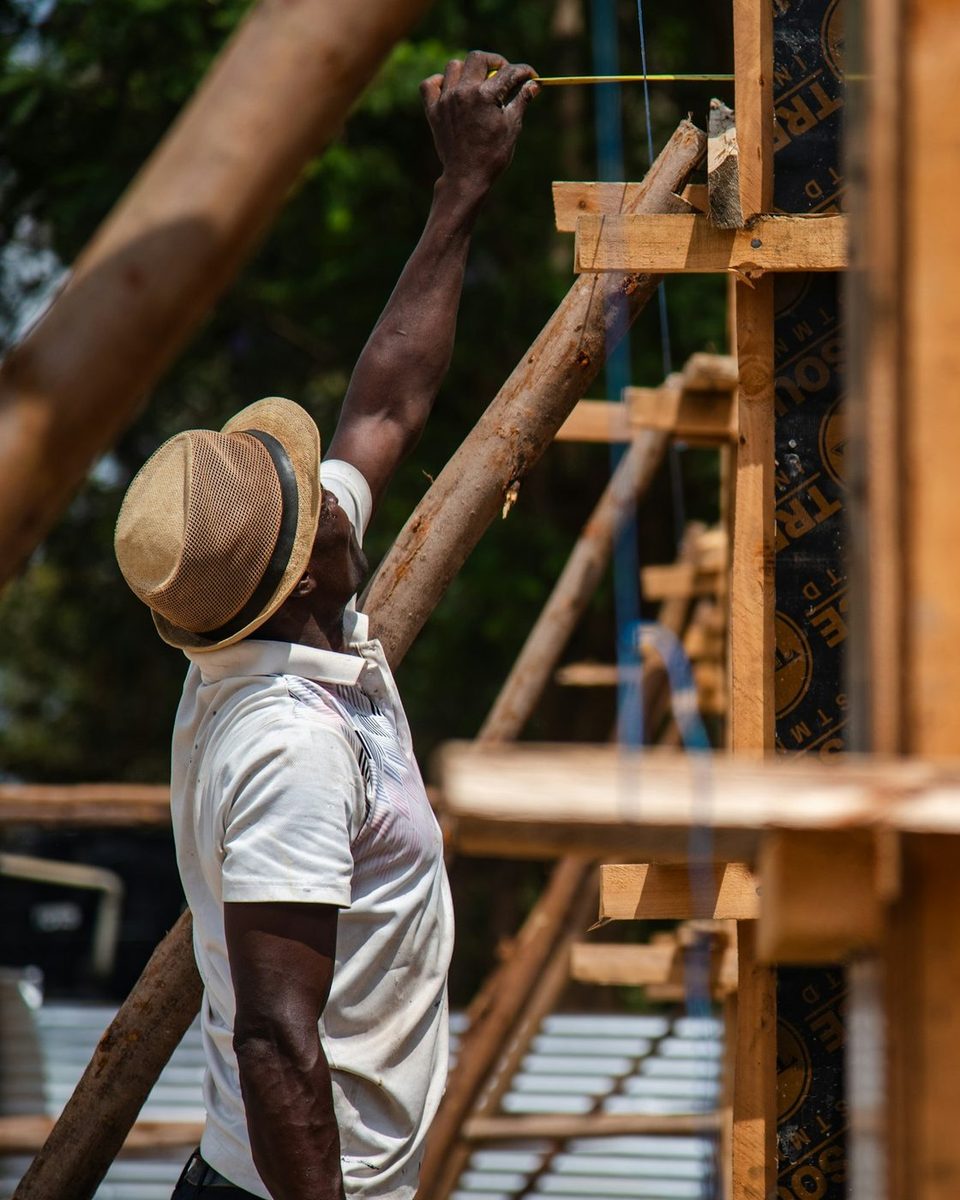
Image note: the photograph on this page is a licensed stock image showing construction work of the kind this phase would pay for. It is not scalA's site and does not show work already completed. Photo: Hammilton Ojijo / Unsplash.